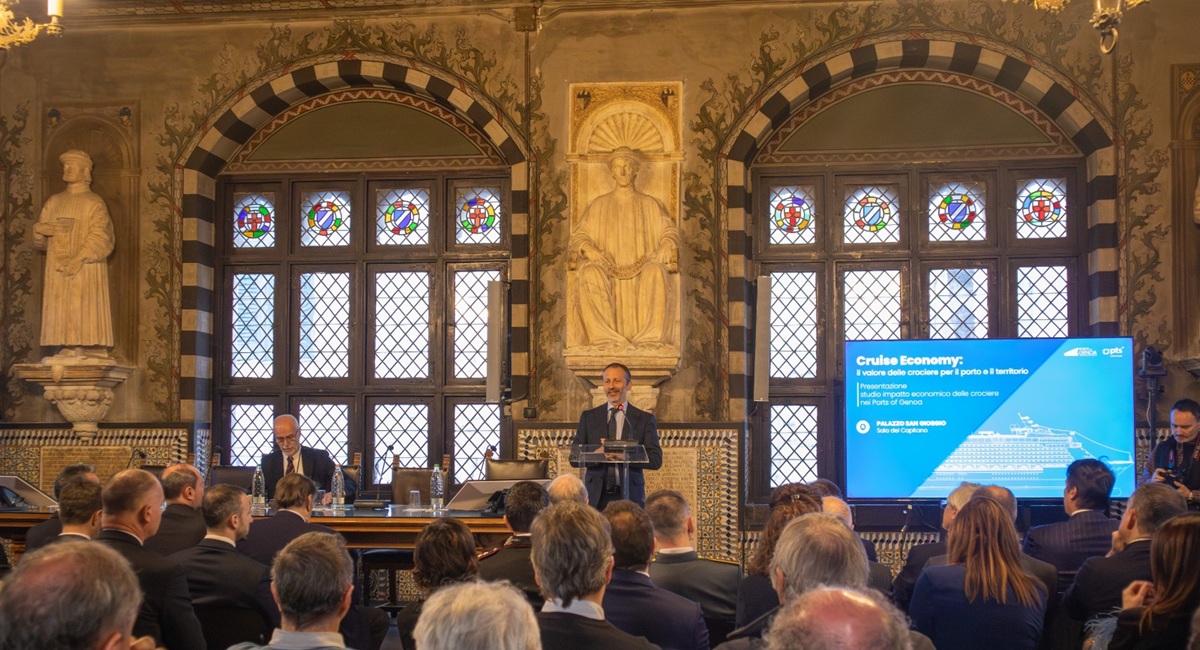

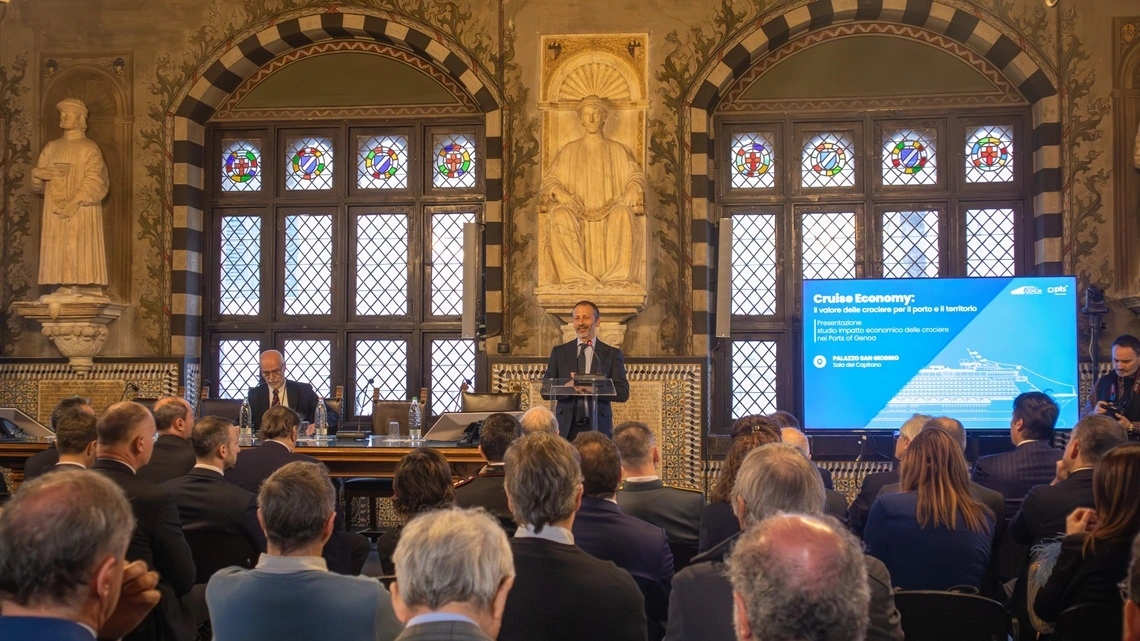
Genoa, 30 March 2026 – The cruise industry has reaffirmed its status as a powerful economic engine for Liguria, with new findings highlighting its growing contribution to regional prosperity. Unveiled at a workshop organised by the Western Ligurian Sea Port Authority at the historic headquarters of Palazzo San Giorgio, the study, commissioned by the Port Authority, offers a comprehensive assessment of the sector’s impact, in terms of employment and gross value-added contribution to local GDP, across Genoa and Savona.
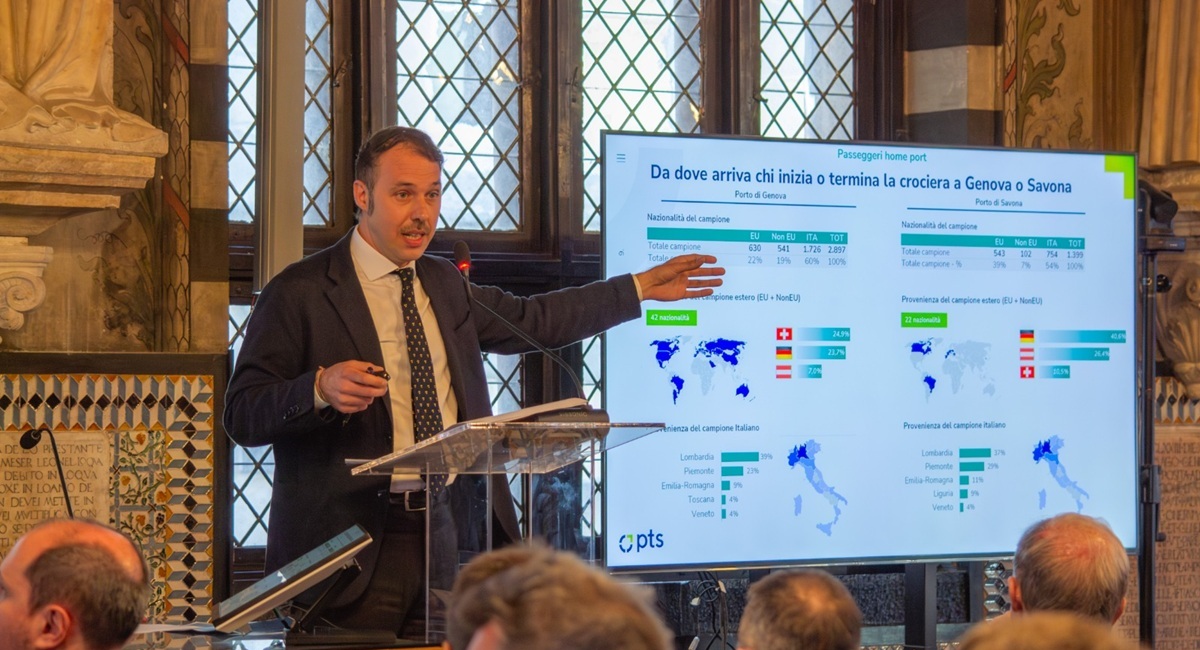
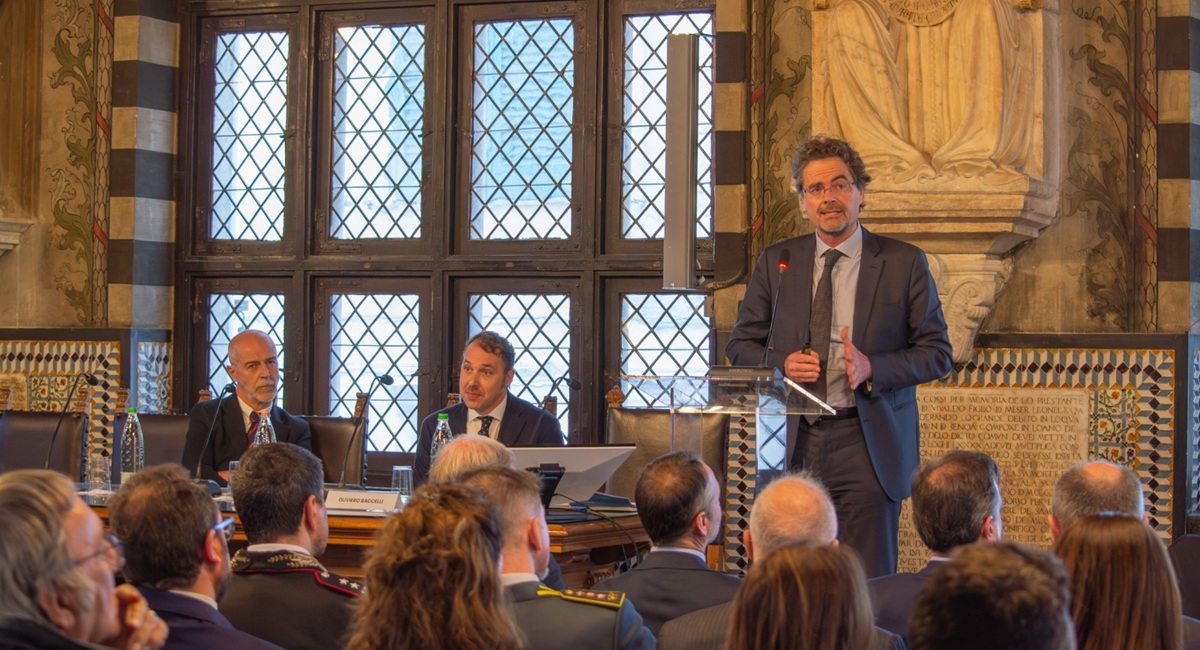
The results of the “Study on the Sustainability of the Cruise Industry in the Ports of Genoa and Savona”, conducted by PTS on behalf of the Western Ligurian Sea Port Authority, were officially announced by Senior Advisor and Scientific Coordinator, Oliviero Baccelli. The cruise market emerges forcefully as a sector that successfully combines three major economic drivers - tourism, ship construction/refitting and innovation - and confirms the Ports of Genoa’s leadership in the Italian and Mediterranean cruise industry.
In 2025, the cruise sector generated a total economic impact of €346 million in the Ports of Genoa and Savona, with €255 million (73%) associated with turnaround activities and €91 million (27%) with transit operations. These figures reflect combined spending of €157 million by passengers and €189 million by cruise lines. In addition, it is estimated that 2,700 people are directly employed in port-related cruise services.
The data clearly shows that homeport activities represent the sector’s highest value-added component, as they derive from longer passenger stays and a greater use of local services. A notable strength lies in the complementary nature of the two ports: Savona records a higher share of homeport traffic (53%), whilst Genoa handles a greater proportion of transit passengers (60%). This balance concurs to consolidate the ports’ position as a leading hub which can cater to diverse market segments and maximise overall economic returns.
In terms of passenger spending, the study calculated total expenditure in Genoa at €100 million and €57.3 million in Savona. Average per turnaround passenger spend rate stands at €90.7, compared to €44.3 per transit passenger. Cruise line expenditure amounts to €189 million, breaking down into over €134 million generated by cruise calls in Genoa and €55 million in Savona, further reinforcing the dominance of homeport activities, which account for over 80% of total spending on the part of the liners. These include the provision of technical-nautical services, terminal operations, security, waste management and onboard supplies. The results show that the cruise industry today represents a vital component of the local port economy.
Passenger satisfaction levels were strikingly high, with over 80% of respondents stating: “I liked the city, I would return”. This reflects the appeal of Liguria’s city-ports as destinations in their own right. Globally, the data gathered in Genoa and Savona form part of a general scenario which continues its upward trajectory. In 2025, 33.7 million cruise passengers travelled worldwide, with projections indicating a 25% increase in fleet size by 2035 and a +30% rise in capacity, equivalent to over 200,000 additional berths.
Beyond its direct contribution to economic development and employment, cruise industry operators emerge as pioneers in maritime innovation and sustainability. Over 60% of new vessels are equipped with LNG or alternative propulsion systems, whilst advances in methanol, biofuels and synthetic fuels are gaining momentum. The expansion of onshore power supply infrastructure further signals a shift towards cleaner port operations.
The study identifies substantial scope for further growth, with 77 newbuilds on order over the next nine years, providing an additional 200,000 berths. As demand for cruising activities becomes increasingly nuanced and diversified, as underlined by CLIA (Cruise Lines International Association), supply chains and port services will need to adapt accordingly. Finally, the study underlines how the sector’s expansion is creating fresh opportunities for shipbuilding and refitting, sectors in which Genoa already holds a leading position in the Mediterranean.
Matteo Paroli, President of the Western Ligurian Sea Port declared: “The high level of attendance at this workshop confirms just how central the cruise industry is today to our local economy and how insightful our administration was to commission a dedicated in-depth study. The figures point forcefully to a sector in rapid expansion, with Italy playing a major role worldwide, and the Ports of Genoa consolidating its leadership in terms of volumes. We are focusing upon a sector that generates tangible value for the local community, with significant economic benefits generated above all by Genoa and Savona as turnaround ports - a strategic element that we must continue to strengthen. At the same time, we are aware of the complexity involved in managing such large-scale flows and of the need to ensure that growth remains compatible with urban life and strict environmental standards. Cruises also provide an excellent opportunity to showcase Liguria to the world, and form part of a wider system that encompasses infrastructure, airport connections and world-class industrial expertise. It is no coincidence that cruise ships are now the “Formula 1 of the Seas”, in terms of innovation and sustainability. Within this framework, the Port Authority’s policies are aligned, with major infrastructure and environmental mitigation investments underway, such as the installation of onshore power supply facilities and the development of alternative renewable fuels, aimed at balancing growth with quality of life. With the benefit of hindsight, the paradigm shift is unmistakable: a sector once regarded with scepticism has become an integral component of a modern, dynamic, and competitive transport system. This vision is substantiated by tangible results, and we remain committed to its continued development".