

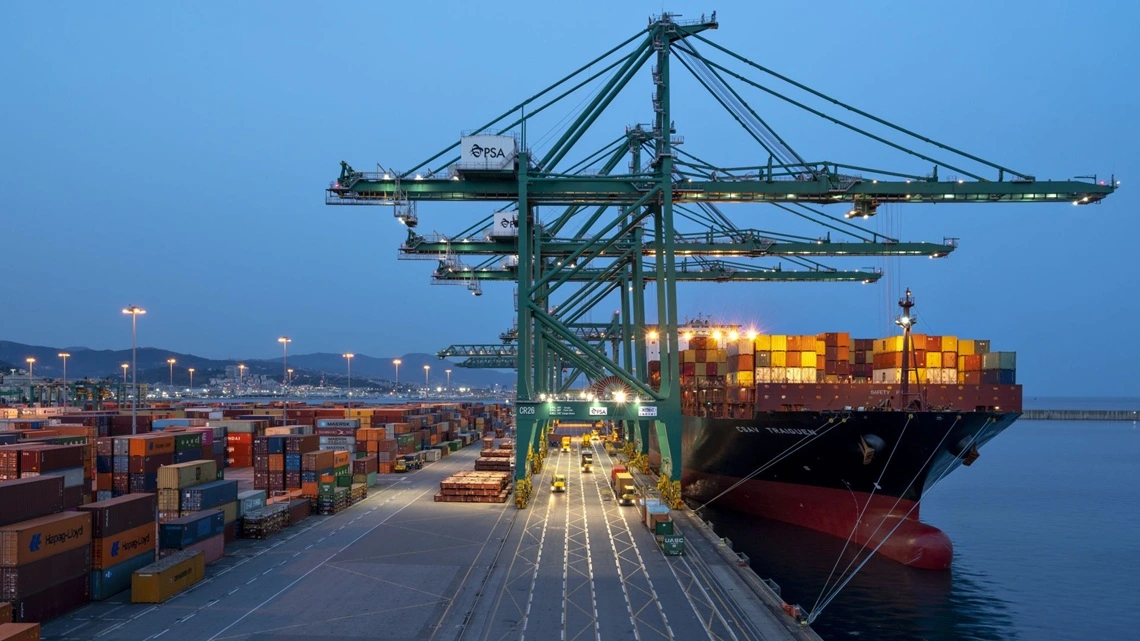
The Italian Customs Agency (ADM), in collaboration with the Western Ligurian Sea Port Authority, and with the support of the Italian Financial Police Force, has launched the Port Tracking I-Road System at the Port of Genoa-Pra’, home to the port’s flagship gateway full-container terminal.
The initiative marks a further step in ADM’s digital transformation programme and forms part of the Customs Single Window, thereby fostering closer digital integration amongst the key players in the port and logistics sector, including public authorities, industry stakeholders and terminal operators.
The Port Tracking I-Road System monitors in real-time heavy goods vehicles and cargo flows throughout the port and wider logistics chain, ensuring the availability of live information to support effective controls and to optimise the efficient movement of cargo, across the integration of ADM’s AIDA Customs Information System with the Ports of Genoa’s Port Community System (PCS).
With a more intensive use of automated data exchange, the Customs Agency and the Financial Police Force can deploy advanced tools to conduct targeted, timely and effective cargo inspections. At the same time, by improving on-site terminal accessibility, the system is expected to improve road traffic flows by cutting dwelling and transit times at the port gates, whilst also contributing to a reduction in associated emissions. Data exchange and processing under the project are strictly limited to the specific customs, inspection and operational purposes for which the information has been collected and made available through the integrated systems.
In addition, the new digitalisation programme plays a strategic role at national level. By extending the Port Tracking model to ports across Italy, it bolsters the development of an integrated digital platform for the country’s port network. The adoption of integrated technological solutions promotes a greater harmonisation of procedures, intensifies the use of data exchange to meet specific operational and inspection requirements along the logistics chain, and forges closer cooperation amongst the public authorities, thereby enhancing the overall efficiency and competitiveness of Italy’s port and logistics industry.