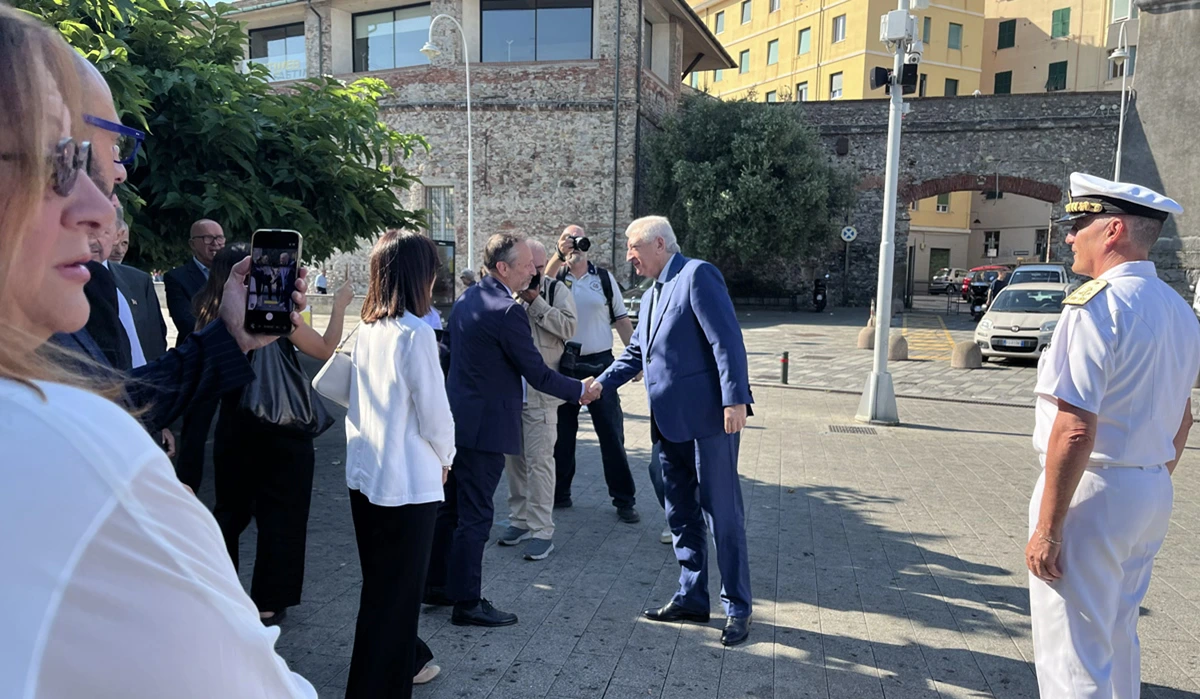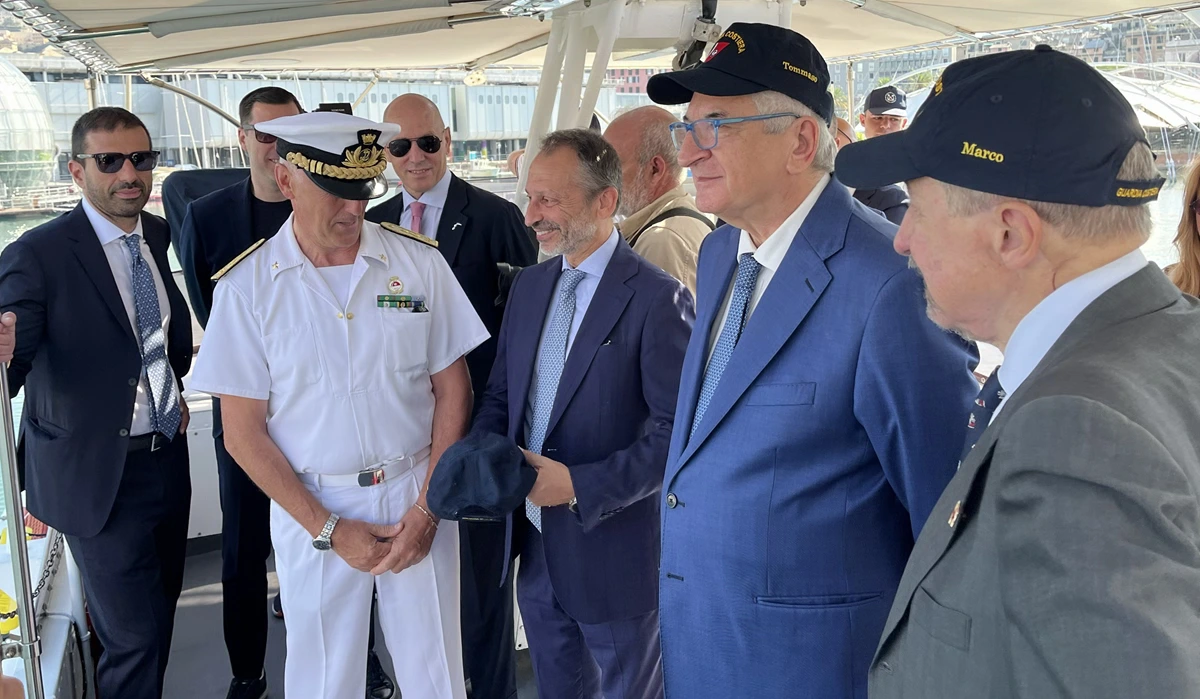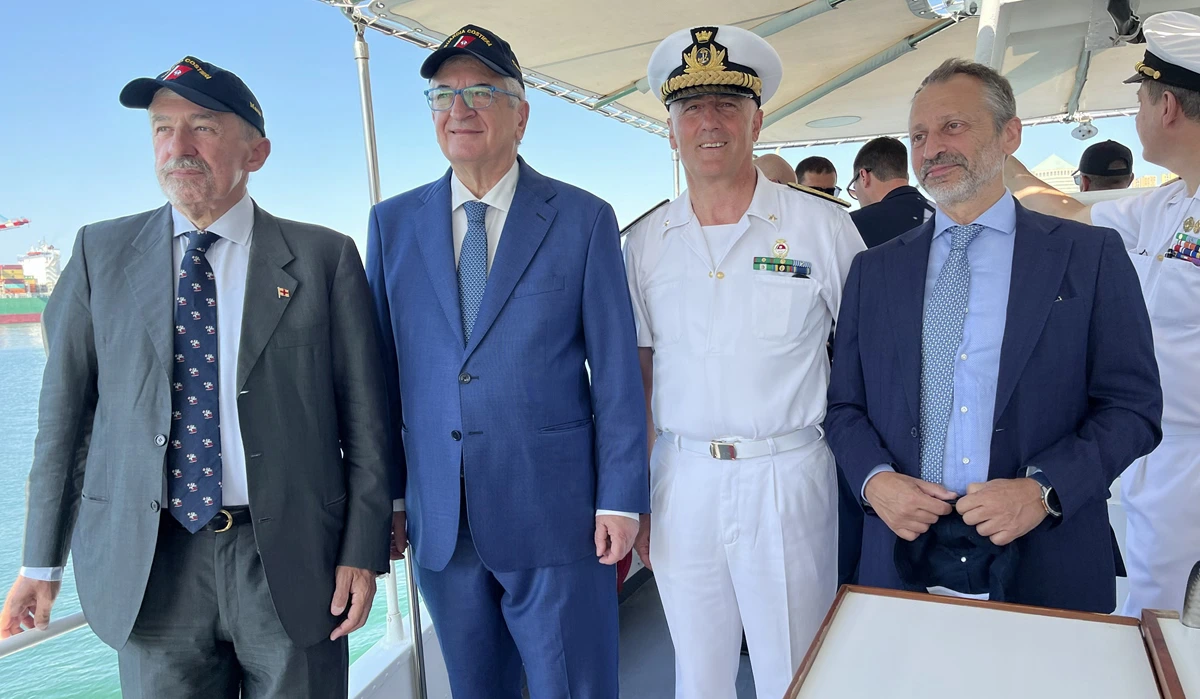


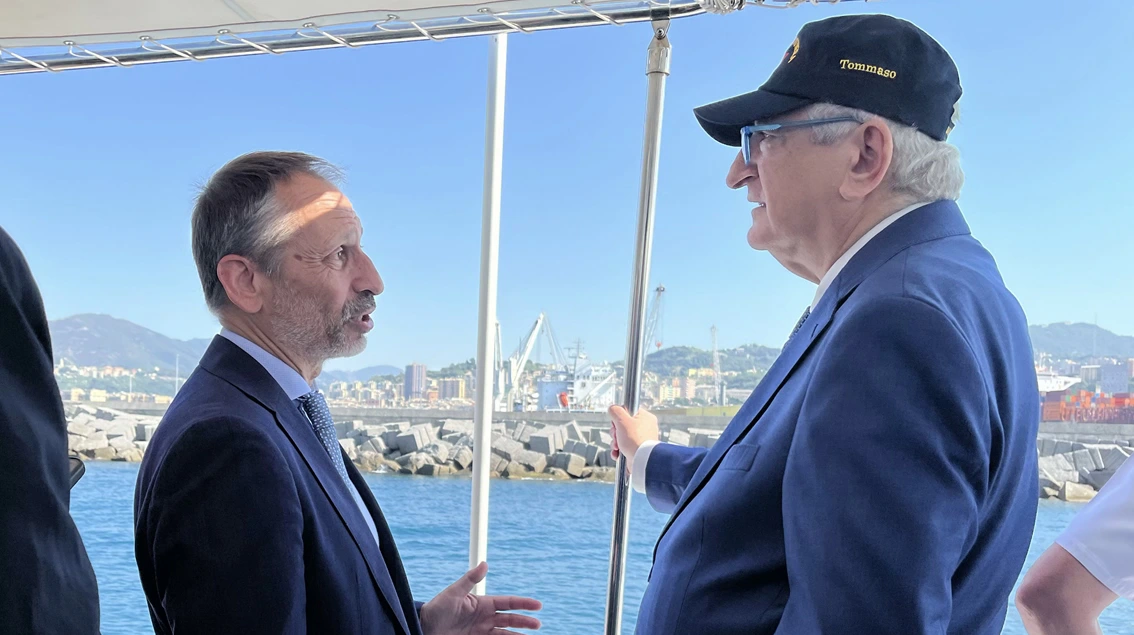
9 July 2026 - The new open-sea breakwater and the comprehensive 3.6-billion euro infrastructure investment programme underway at the Ports of Genoa were the focus of an official site-visit conducted by the Italian Minister for European Affairs, PNRR (National Recovery and Resilience Plan) and Cohesion Policies, Tommaso Foti. The Minister was flanked by the President of the Liguria Region and Government Commissioner of the New Breakwater, Marco Bucci, the President of the Western Ligurian Sea Port Authority, Matteo Paroli, the Regional Councillor of Infrastructure, Giacomo Raul Giampedrone, the Deputy Commissioner of the New Breakwater, Carlo De Simone, and the Commander of the Maritime Headquarters of Liguria and Harbour Master of the Port of Genoa, Admiral Antonio Ranieri.
During the site-inspection by boat, Minister Foti was briefed on the major projects currently underway across the port, including an update on the progress of the construction of Italy’s largest planned maritime infrastructure project, the new open-sea breakwater, a sophisticated feat of engineering which is set to play a key role in strengthening the Port of Genoa’s global competitive edge, whilst enhancing overall the efficiency of the Italian supply chain. Ranking as one of the country’s flagship strategic infrastructure projects, the new facility has in part been funded by the National Recovery and Resilience Plan (PNRR) and the National Complementary Investment Plan (PNC). Once completed, the new breakwater is expected to usher in a new era for Genoa’s Sampierdarena basin. Positioned 400 metres offshore from the existing structure, the 6.3-km long facility has been designed to cater for the next-generation of ultra-large vessels, improving maritime access and upgrading navigational safety.
“In addition,” stated the President of the Western Ligurian Sea Port Authority, Matteo Paroli, “the construction of the New Breakwater will release further operational areas across the port, expanding capacity at both the cargo terminals and the shipbuilding and refitting yards. It represents a comprehensive structural transformation of the Port of Genoa to meet the evolving demands of the supply chain and maritime industry in the years ahead.”